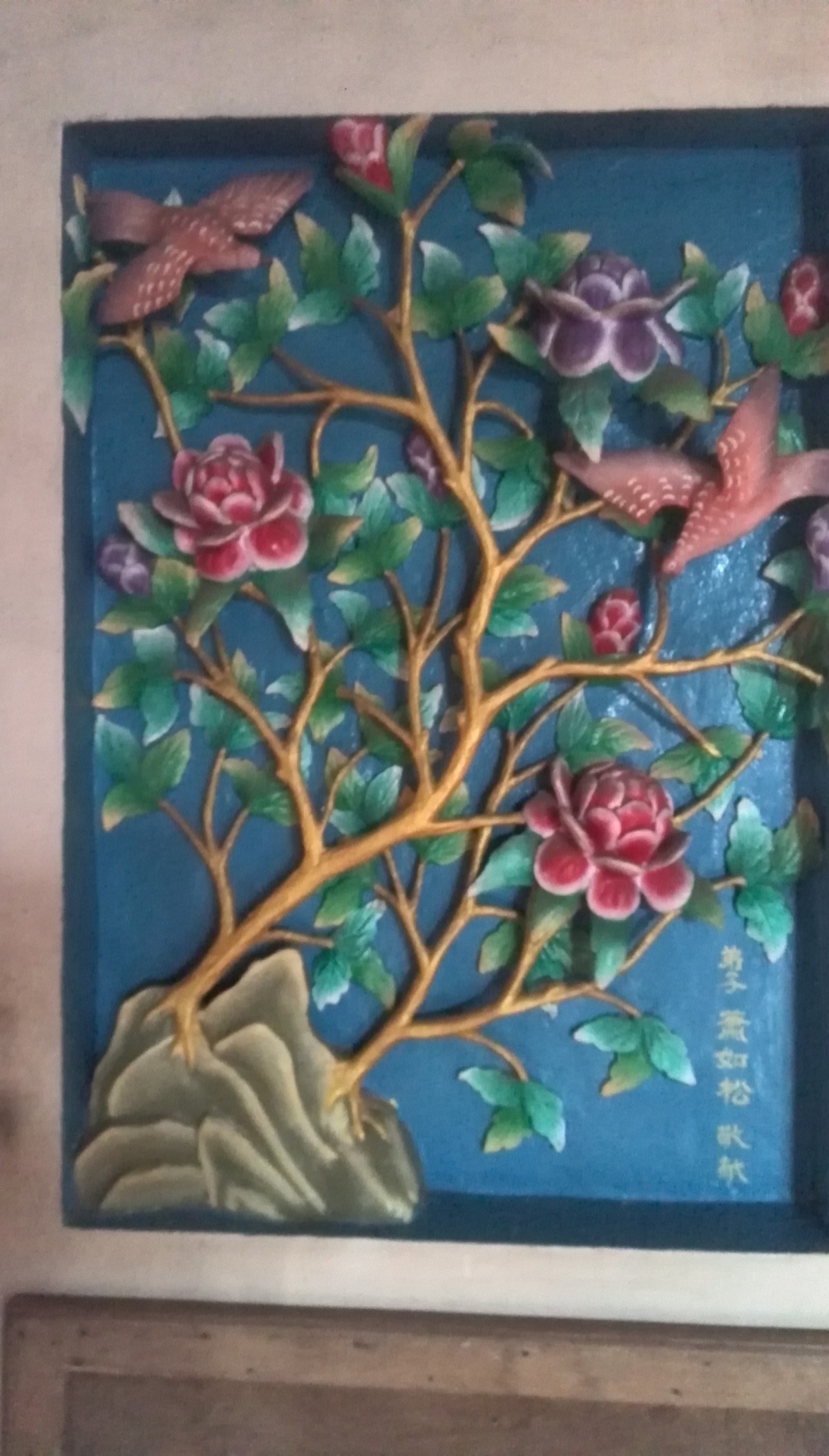
在澎湖有很多廟。台湾廟比日本廟五彩缤纷。此外,私人的廟不多,大一部分廟是公用的。昨天在五德村我去看有意思的廟。漂亮的画儿很多,这把画儿都有故事。我看着画儿的时候,忽然老人对我说,“你喜欢呢?” 我说“对,“我很喜欢”。我想请他对我讲故事,但是即使他明白我的请求我觉得不明白他回答。所以我 说“把这画儿有名的故事吗?“ 他说“有名”。就我说,“佛教的故事吗?“。他回答,”不是。“ 我明白了,很高兴。(我觉得这样的廟没有佛教,所以在画儿的故事旧的台湾人民的故事。我的太太, 诚子,常常说 “学习外国话时候如果问问题的说,以前知道回答更好。如果有是这样的话听得懂。)
澎湖で社寺(お寺や神社)は多いが、日本のお寺や神社より台湾のものは派手です。また、日本では、小さいお寺はよく個人のものなので一般人が入るのは難しいが、台湾のお寺はほとんど公共のものです。いつでも、誰でも入ってもいいところです。先日马公市の近くの「五德村」で小さく面白いお寺へ観に行きました。そこには、すごく綺麗なストーリを表す絵が多かったです。その絵を観ながら、突然現地の年寄りの人が、「好きですか?」と聞いて、「好きです」と私が言った。その方に絵のストーリについて教えてもらいたいと思ったが、彼が私の片言の中国語での質問を理解しても、私は彼の答えを理解しないと考えました。複雑な話だからです。だから、「それは有名な話ですか?」と聞いて、彼が「有名です」と答えました。それで、「仏教の話ですか?」と聞いて、彼は、「仏教の話ではない」と答えました。この短い会話をちゃんと理解したので、嬉しかったです。(実はすでに知っていました。このような社寺での絵はよく台湾民間伝承についてだと思います。私の妻、誠子がいつも言うのは「外国語学習の方法として、すでに知っていることについて質問をするのは効果的です。答えを既に知っていれば聞き取りやすいからです。」)
In Penghu there are lots of temples and shrines, big and small, just like Japan, but they are much brighter and more colourful. Also, lots of small temples in Japan are privately owned and not open to the public, but in Taiwan almost all are public. Anyone can go in, any time. The other day I went to have a look at a small temple near Magong, in a village called Wude. There were (as usual) lots of beautiful pictures, each one obviously representing a story. While I was looking at these, an elderly man asked me, ‘do you like them’? ‘Yes, I like them,’ I said. I would have liked to have asked him to explain the stories that the pictures represented, but I thought that even if he understood my question in my basic and poorly pronounced Chinese, I probably wouldn’t be able to understand the answer. Instead, I asked, ‘Are they well-known stories?’ ‘Yes, they’re well-known’, he said. ‘Are they Buddhist stories?’ I asked, ‘No, not Buddhist stories’ he said. I was very happy that I was able to understand the whole of this little exchange. (Actually I already knew the answer. These kinds of temples are not really Buddhist anyway, and the stories depicted are most likely to be traditional Taiwanese stories, I think. As my wife Seiko always says, it’s a good learning strategy to ask questions to which you already know the answer, because you are then more likely to catch the words!)
I needed the dictionary for these words:
五彩缤纷 - wǔcǎi-bīnfēn 颜色?(very colourful)
此外 - cǐwài (in addition)
私人 - sīrén